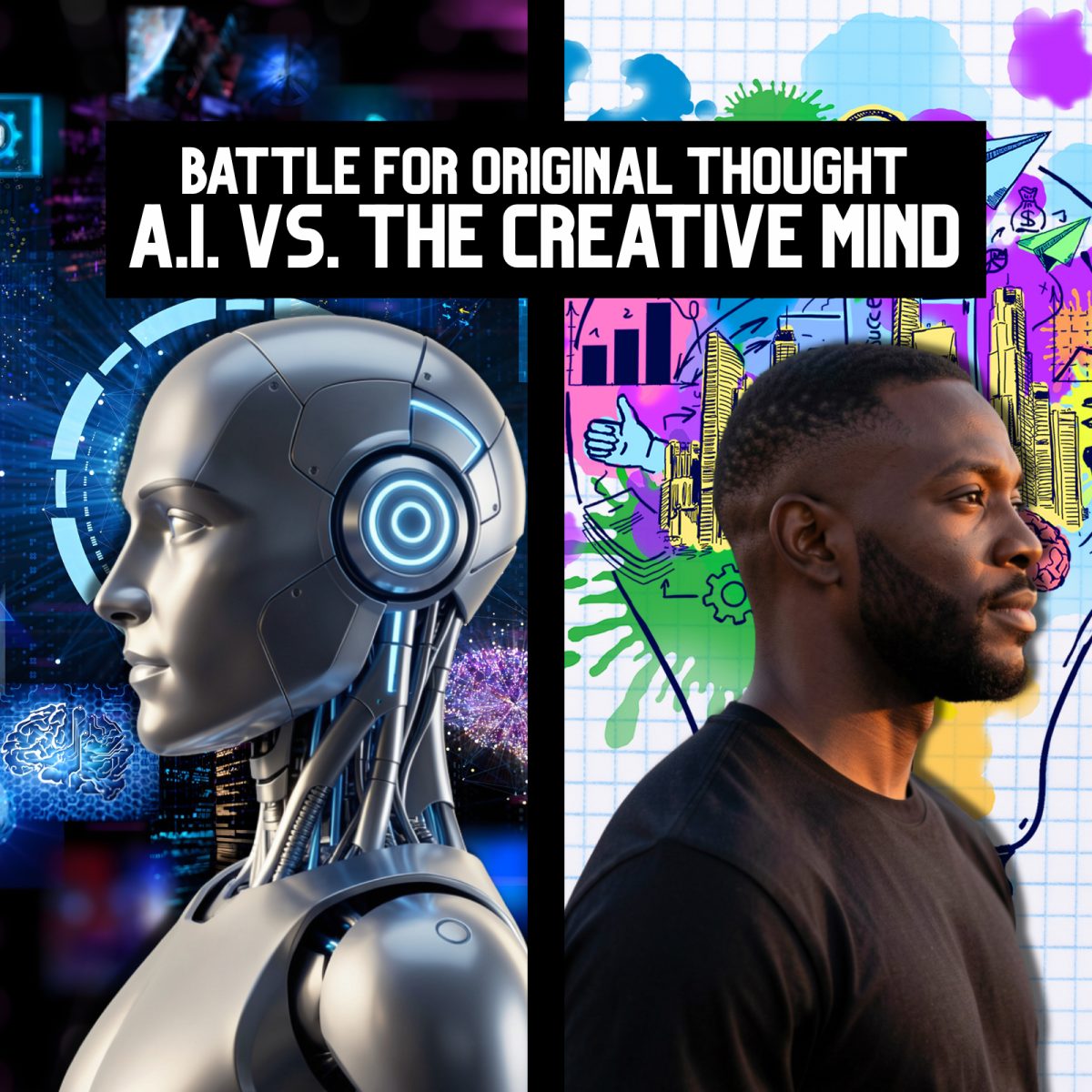
Artificial intelligence is everywhere now. It writes, designs, edits, and creates at the click of a button. While AI can be helpful in certain spaces, I believe it should never replace the human creative mind. Lately, I am especially tired of seeing AI-generated flyers from organizations and companies that claim to value originality, culture, and connection. Instead of creativity, everything looks copied, generic, and soulless.
Creativity is more than producing something that “looks good.” It comes from lived experience, emotion, culture, struggle, and imagination. A creative mind understands context. It knows why certain colors matter, why certain words hit harder, and why design choices can tell a story. AI does not feel, dream, or struggle. It pulls from existing data and repackages it. That is not creativity. That is imitation.
When organizations rely on AI flyers, they lose their identity. You start seeing the same fonts, the same layouts, the same overly polished look that lacks personality. Flyers are supposed to represent people, missions, and communities. Instead, AI designs feel distant and impersonal. They do not reflect the heart of student organizations, grassroots movements, or brands that claim to stand for authenticity. It sends the message that speed matters more than meaning.
Another issue is that AI quietly devalues human creators. Designers, artists, writers, and creative thinkers spend years developing their skills. When companies choose AI over people, they are choosing convenience over craftsmanship. That decision tells creatives that their voices, styles, and originality are optional. Over time, that mindset damages industries that thrive on innovation and expression.
I am not anti-technology. AI can be a tool, but it should not be the driver of creativity. Tools are meant to assist human vision, not replace it. The best designs come from people who understand their audience and care about what they are creating. A flyer made by a person carries intention. A flyer made by AI carries efficiency, and those are not the same thing.
At the end of the day, creativity is human. It is flawed, bold, emotional, and unpredictable. That is what makes it powerful. If organizations want to truly connect with people, they need to invest in real minds, real talent, and real stories. AI can generate content, but only humans can create meaning.