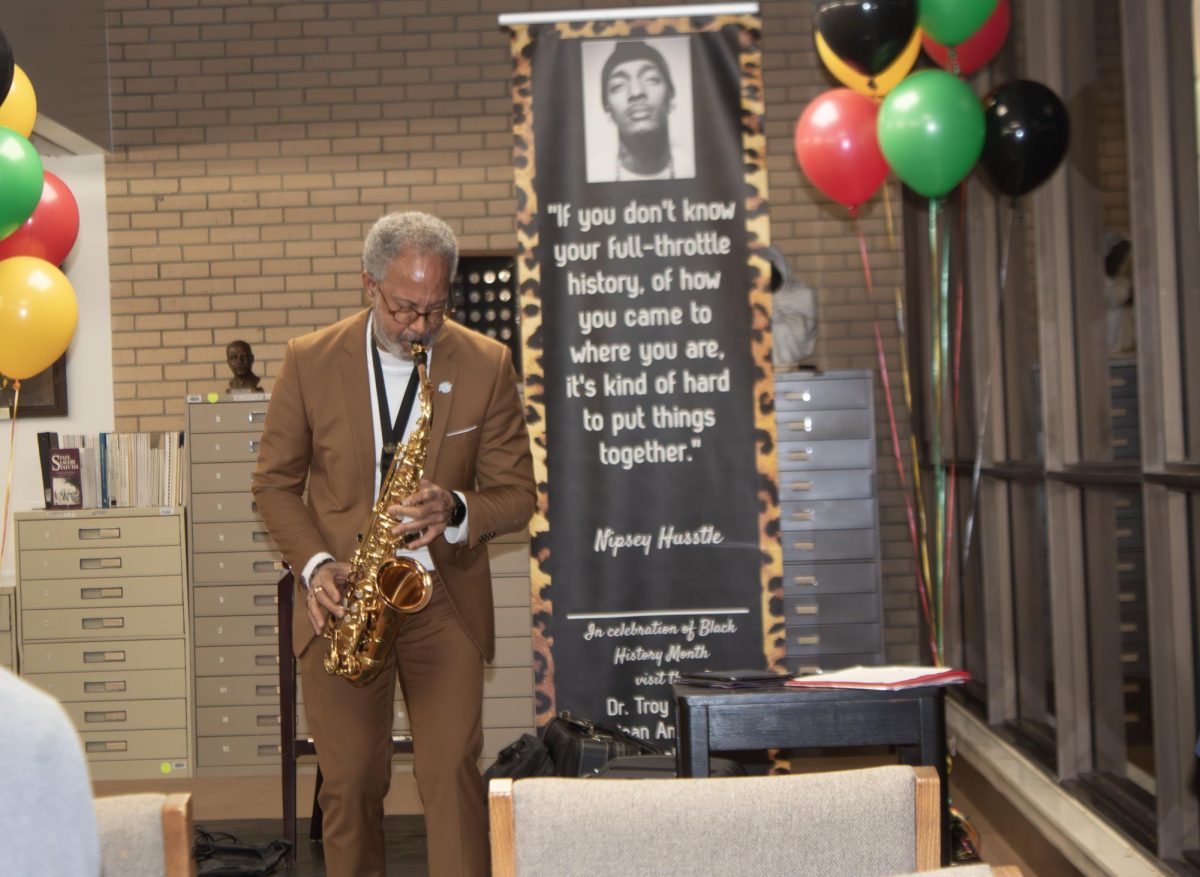
Thanks to the vision of library staff, Southern University launched its Tiny Desk performance series this past Thursday February 5. Throughout Black History Month, the John B. Cade Library will host Tiny Desk performances every Thursday, welcoming both established community musicians and, eventually, Southern students themselves. What began as a celebration of legacy is also meant to serve as an open invitation, reminding students that they have a creative space of their own on campus.
While the series marks a first for Southern University, its timing adds deeper significance. Hosting the performances during Black History Month transforms the John B. Cade Library into more than a study space, turning it into a living gallery of sound, history, and expression. Library staff emphasized that the goal is not only to honor influential artists but to ultimately pass the stage to students, reinforcing that their voices, stories, and talents belong at the center of campus culture.
“There is so much talent and so many gifts on this campus; we want to hold a space to honor that and mark John B. Cade as our students’ home away from home,” said instructional librarian Quiana Wright.
That sense of belonging resonated with those in attendance. One student described sitting in the library surrounded by Black art, history, and music, noting how the performance made Black History Month feel present rather than symbolic. In that moment, the space became a reflection of the culture it was celebrating.
“To experience this means bringing diversity to our campus and appreciating our culture,” said Angelina Lugo, a senior in the Department of Social Work. “What’s most important is honoring our legacy and our art. Right now, we’re surrounded by books, Black minds, and Black faces. Being in an environment like this is important to our legacy at an HBCU, and this event highlighted exactly what Black history is.”
For saxophonist Eric Whitfield, the night carried personal meaning as well. A Baton Rouge native who grew up on Southern University’s campus, Whitfield described the performance as a full-circle moment, one that honored the history that shaped him while allowing him to give back to the community that raised him. Throughout the set, Whitfield blended jazz with hip-hop samples ranging from Tupac and OutKast to Alicia Keys, Pharrell Williams, and So Fresh, So Clean, bridging generations of Black sound and influence.
“History is important—you have to know where you came from to understand where you’re going, even in music,” Whitfield said. “You have to recognize the roads paved before us so we can learn different styles. Black history is world history.”