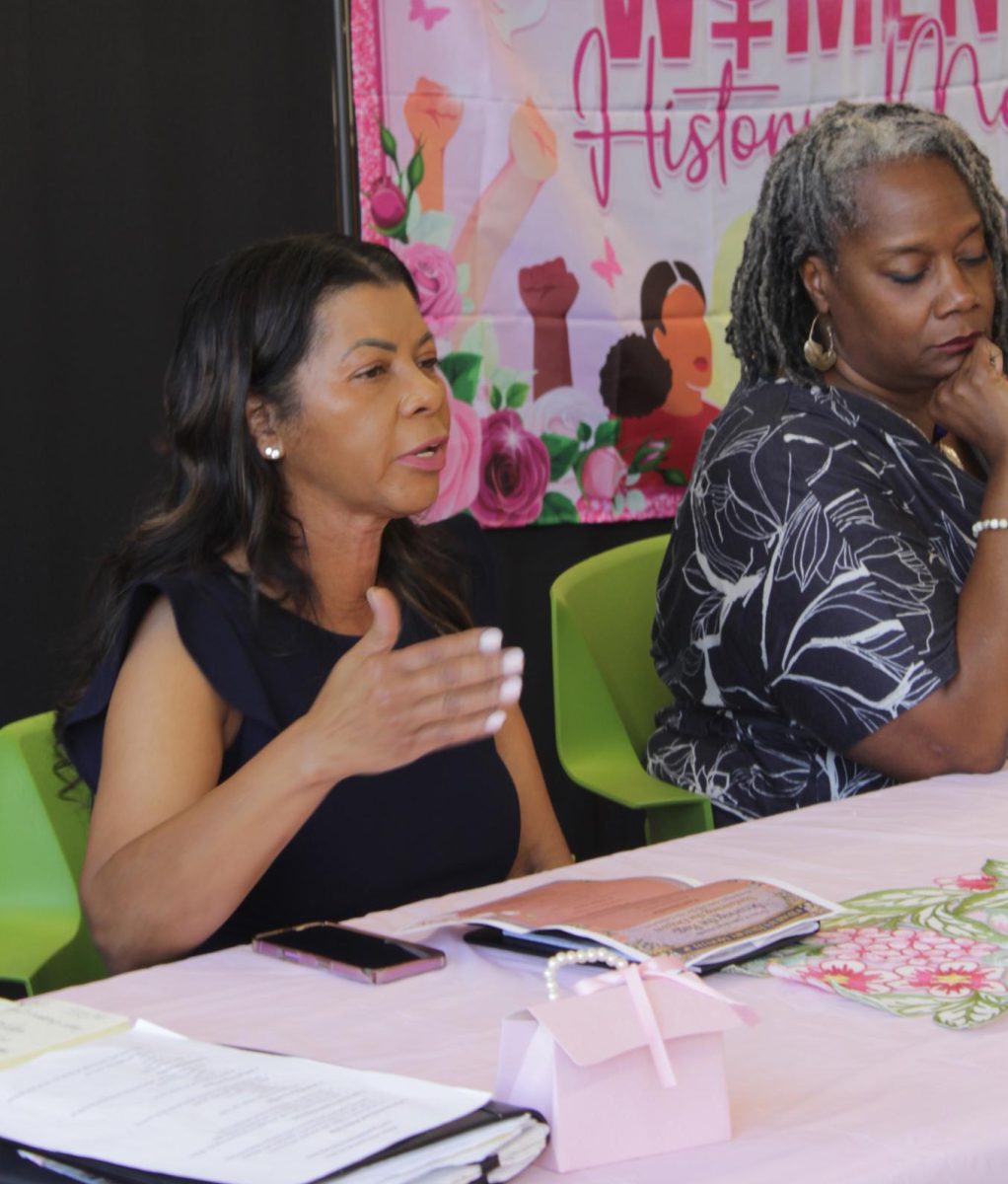
An informative workshop aimed at students graduating in any of the healthcare fields was held at the new Welcome Center on Friday, April 10.
Many organizations and entrepreneurs came to set up and engage with the students. Humana, Healthy Horizons in Louisiana was one who came and spoke of their Medicaid plans they offer with benefits such as; pregnancy support, transportation help, and over the counter pharmacy allowance. Another organization that was there was Biogen. This is an organization that helps foster a more informed community-centered approach to care.
Though these organizations were great and informative overall, we turned over to a guest speaker who is an Author, a certified public accountant, and a certified financial education instructor. Her name is Holly D. Reid. She came to discuss financial readiness; this includes minimum student debt, making smart money moves, stats, and great advice moving forward when spending and receiving money.
Reid shows us stats of black wealth are projected to be 0$ by 2053. Not just healthcare students but many of our students overall aiming to pursue a degree have a bright future ahead of them but are at risk of having to be in debt graduating from school, meaning a lot of their money earned ends up coming out there paycheck every pay period to pay back these student loans, credit cards or whatever you have to owe before you actually start making steady, reasonable income. This is concerning because imagine all the years you put into school to finally be comfortable, then your barley making money and retirement looks even further because of poor money management while you were younger.
What does average student loan debt really cost borrowers? Reid informs us having to consistently be in debt and not keep all the money you’re making can impact you through things like “pushing back your ability to own a home 5 extra years, approximately 500,000 in lost retirement savings, that luxury car you definitely deserve after going to school and working for years or even half of a college savings”.
What can we do about this? The money for school resides in scholarships, grants, work study, seasonal employment, entrepreneurship, income tax refund or being a brand ambassador. Finding a job that can hire you over small breaks like H.E.B or restaurants can be seasonal employment, setting up to sell at your school, things like cool cups, tee shirts or even old vintage pieces people might buy can be a way of entrepreneurship, and for scholarships, it is recommended to connect with people so you can find active scholarships you can apply for even throughout the year. “A lot of student’s problem is in the beginning before they get to college, their doing really good, getting all the scholarships they can and then by sophomore year they just stop trying to apply when there’s money sitting there waiting for you guys” Ms. Reid. Overall, working and putting time aside to make money to start paying these student fees now is critical because you will not have much to worry about as far as getting money deducted from your earnings when you’re graduating.
Another main point is where our money is going. Spend and save wisely, before you purchase something ask yourself, “is this something I need or is this just for appearance?”, “Is this something I can gain from or is this just pushing me further from my goals?” Reid closed her meeting out by giving us the book she wrote to help us have better money management called Teach your child to fish/ five money habits that every child should master.
Dietetic Interns Jakyra Allen, and Arlisha Davis here at Southern says “ We wished more people would have come to hear these important pieces of information because I don’t feel like anyone has ever address this before and I think we can be at risk of being put in a loop of always having to pay back money instead of enjoy it.” “We also really enjoyed this meeting allowing us to network with people and get opportunities for more insights on my field”.
While students are enrolling in these colleges, planning for our future let’s also focus on closing the gap between owed money and getting to live off your own money.